Monday, June 4, 2018


“This is America”
The video has racked up more than 234 million views on You Tube.
It reveals provocative imagery of Donald Glover as he guns down a choir and dances while violence breaks out all around him. The central image is about guns and violence in America. We deal with guns and consume them as a part of entertainment and also as part of our national conversation.
   The opening moments of “This is America” show a man strumming a guitar alone to choral sounds. Gambino shoots the man who had been tied up with a head cover. Childish Gambino hands the gun to another man who safely wraps it in a red cloth as the obscured man is dragged away.
   Ramsay says that the timing; that this is happening during the songs move from choral tones to a trap sound allows Gambinio to straddle contradictions and also allows the viewer to identity with his humanness. 
The moment goes right into the first rapped chorus: “This is America/Don’t catch you slippin-up.
   Gutherie Ramsey, a professor of music history at the University of Pennsylvania tells us that Glover’s Decision to wear just gray pants without a shirt in the video allows the viewer to identify with his “humanness” as he raps about the violent contradictions that come with being black in America.
      “It comes out of two different sound worlds. Part of the brilliance of the presentation is that you go from this happy major mode of choral singing that we associate with South African choral singing, and then after the first gunshot it moves right into the trap sound.
  According to Ramsey, “Gambino” could be anyone. He is almost unadorned. He is also totally without the accoutrements of stardom. He dances in neutral colored pants, dark skin with textured hair. 
Gambinio and a group of kids clad in school uniforms dance throughout much of the “This is America” video while violence erupts behind them. The dancers could be there to distract viewers in the same way black art is used to distract people from real problems plaguing America.
   Towards the middle of the video, a choir sings enthusiastically in a happy tone before Gambinio shoots them all. The massacre and its quickness recall the Charlston shooting in which white supremacist Dylan Roof killed nine black people in a church basement. The image and what it evokes show how people reconcile and separate different instances of violence. We consume violence on all sorts of platforms; the news, music videos, or television shows.
   It actually becomes difficult to absorb real instances of mass murder.
   “You cannot escape the violence,” Ramsey says, but you are being forced to separate how you feel about it in our digitalized world.” The final moments of the video show Gambino running; terrified down a long dark hallway from a group of people while young thug sings “You a Black man in the world/ you just a barcode, ayy.” Gambino’s sprint goes back to a long tradition of black Americans having to run to save their lives. According to Ramey, “one song dating back to slavery in the 19th century was called,” Run-N-Run.”
   One of the more subtle visual cues: the Confederate-style trousers that are visible in almost every scene in “This is America” are indicative of the Confederate soldier’s fight to keep slaves from being freed. The covert implications speak to the still extant racism in modern American culture.
   I have a tendency to concentrate on the significant progress that has been made in race relations in America. This video opened my eyes to the feelings of the other side.

John B.
  

Friday, November 10, 2017


      On the most basic level an art fair is a trade show. It is a place for people in the art business, from dealers and art advisors to collectors and curators to “kibitz” and make deals.
   Exhibitions act as the catalyst of art and ideas to the public. They represent a way of displaying and contextualizing art that makes it relevant and accessible to contemporary audiences.
   The art exhibit, by its nature, holds a mirror up to society reflecting its interests and concerns while at the same time challenging its ideologies and preconceptions. Keeping art relevant to society and to a diverse audience at any given point in history is one of the main goals of the art exhibit and one of the main reasons it is so important to the history of art. Exhibitions are strategically located at the nexus where artists, their work, the art institutions and many different publics intersect.
      Art Basel is an international art fair. It stages three shows in Basel, Switzerland, Miami Beach, Florida and Hong Kong. Each show is organized into sectors which showcase contemporary artwork by established and newly emerging artists. In addition to artwork shown by participating galleries, the shows offer parallel programing produced in collaboration with the host city’s local institutions.
   Art Basel’s cities engage with partner cities to develop vibrant and intellectually rigorous programs and offer the art world new opportunities to engage with cultural scenes across the world. 
  In the American show at Miami Beach work from masters of Modern and Contemporary art, as well as emerging artists are on display. Galleries from North America, Latin America, Europe, Asia and Africa show significant work from Masters of Modern and Contemporary art, as well as the new generation of emerging stars. Paintings, sculptures, installations, photographs, films, and edition works of the highest quality are on display in the main exhibition hall.
    At its New York show staged on Piers 92 and 94 of the New York Armory, presentations by leading international galleries are on display. It is a cultural destination for discovering and collecting the world’s most important 20th and 21st century art. It is one of the cities industrial gems. The fair features presentations by leading international galleries, innovative artist’s commissions and dynamic public programs.   Since its founding in 1994, the armory show has served as a nexus for the International art world, inspiring dialogue, discovery and patronage in visual arts.
   In its 23 years the Armory Show has stayed firm to its mission while establishing itself as a not to be missed art event set in the heart of New York City.
   The Armory Show was founded by four New York gallerists-Colin deLand, Pat Hearn, Matthew Marks, and Paul Morris. They sought a platform to present and promote new voices in the visual arts. In its 23 years the Armory Show has stayed firm to its mission while establishing itself as a not to be missed event set in New York City. It was organized by the association of American Painters and sculptures in 1913. It is the first large exhibit of modern art in America. The three city exhibition started in New York City “s 69th Regiment Armory on Lexington Avenue between 26th and 27th street from February 17 until March 15, 1913. The exhibition went on to show at the Art Institute of Chicago.    
       David Zwinner in Chelsea one of New York’s better known galleries is an example. It shows minimalist art such as Donald Judd’s “Empty Cubes” or John McCraker’s “Colorful Planks.” It also shows photography ranging from Thomas Ruff’s abstractions to PhilipLorca di Corcia’s fashion.
                                                                                                                       
   The exhibit was held at Chicago and then was shown at the Copley Society of Art in Boston where due to lack of space, all the work by American artists was removed. The show became an important event in the history of American Art, introducing astonished Americans to the experimental styles of European Avant Garde, Fauvism, Cubism and Futurism. The show served as a catalyst for American artists when it was moved to its current location. 
   
   With the globalization of the art market there has been a cross border exchange of value-added economic activity. Goods and services change hands across land and sea and people make money as a result. The number attached to the global art market is only $60 billion. It is only a fraction of the economy, but it has grown considerably. The global import of art grew 280% in the 25 years between 1986 and 2011. In the same period, exports grew by 500% worldwide.
   Art valuation is a subset of financial valuation. It is the process of estimating the market value of a specific work of art. It is more of a financial rather than an aesthetic concern. The subjective views of cultural value also plays a part. Art valuation involves comparing data from multiple sources such as:
Art auction houses, private and corporate collectors, curators, art dealers, active gallery owners, experienced consultants and specialized market analyst consult to arrive at a value. Art valuation is accomplished, not only for collection, investment, divestment and financial purpose, but also to establish a barometer for impending sale.
   The source of a work’s artistic charisma has long been debated between artists who create and patrons who enable, but the charismatic power of artwork on those who would possess it is historically the initial driver of value.
   In the 1960’s that charismatic power started edging over to accommodate commercialized culture and a new industry of art. Aesthetic value fell from prominence to parity with Pop Art and Andy Warhol’s idea of business art. Art is now a business and making money in business is an art. 
   One can hardly have a Contemporary art exhibit these days without the cross border exchange of goods and services that stimulate several industries (shipping, security, artistic production, etc.)
   Art and culture help to reveal and enhance the underlying identity, the unique meaning, value and character of the social form of community. This identity is reflected through the community’s character or sense of place. A community’s sense of place evolves and develops over time. It reflects the social values within and around the community. The community character of a city, county, town or neighborhood can be seen as a narrative of place. 
        Art is articulation of the historic, cultural, economic context of a community. It also serves to reinforce that community’s identity. In recent times, the art market has witnessed a revolution in the way art works are purchased. The number of international fairs has jumped from 10 to 60.
   Art valuation is a subset of financial valuation. It is the process of estimating the market value of works of art. It is more of a financial rather than an aesthetic concern. The subjective views of cultural value also play a part. Art valuation involves comparing data from multiple sources, such as art auction houses, private and corporate collectors, curators, gallery owners, experienced consultants and specialized market analysts to arrive at a value. Art valuation is accomplished by more than collectors, investment, and divestment and financial purposes in a strong economy nearly all businesses enjoy greater prosperity. Disposable income is high, unemployment is low and consumer confidence prompts people to pump their money back into the economy through purchases of essential and nonessential goods and services. The impact of a strong economy on small businesses is two-fold; as business increases, so too does the need for small business to keep pace with demand by hiring new employee, expanding retail space or adding new product lines.
   In a strong economy nearly all businesses enjoy greater prosperity. Disposable income is high, unemployment is low, and consumer confidence prompts people to pump their money back into the economy through purchases of essential and non-essential goods and services. The impact of a strong economy on small business to keep pace with demand by hiring new employees, expanding retail space or adding new product lines.
   This may be viewed as positive but the downside is that if the economy falters, many small businesses find themselves over extended which can result in mass layoffs and business failures.
   The overall mood at art Basel’s exhibits this year was distinctly more selective. Year on year totals are down by as much as 64%, at the opening in New York. In spite of the downturn, Frank Stella’s 50 foot wide, “Damascus Gate (Stretch Variation 1) from 1970 sold to an Asian collection for 14 million. James Rosenquist’s 46 foot wide, “Four New Clear Women” was available for 14 million.
                                              
   The US market for Arts and Crafts exceeded 40 billion in 2015, but what is also interesting is that China had already emerged as the source of the world’s largest auction revenue. China, along with other Asian countries such as Hong Kong have become a lucrative destination for renowned auction houses. China is expected to emerge as a hub for art fairs and galleries attracting collectors from across the globe. 
   There is a bourgeoning market for art in Shanghai, China. Shanghai held its eleventh Biennial in 2017 at the Power Station for Art with 92 international artists and 26 Chinese artists on display. The exhibit was held in the converted plant which opened five years ago had previously been slated for the 2010 World Expo.
  Journalist Jiayang Fan relates a visit to the Power Station for an exhibit entitled, “The Great Chain of Being.” Planet Trilogy. Visitors are guided through a series of moonscape-like chambers that narrate a story about extraterrestrial discovery. This elaborate space odyssey inspired by the Chinese sci-fi writer, Liu Cixin’s cult classic, ”The Three Body Problem” is all about three  
   Art Fairs are a futures market in which derivative is a bad word. To be a good bet against near zero interest rates and unpredictable currency fluctuations art needs the potential of a global market. Art must be international to be taken seriously.
   “The art market went down in 2016 because a small number of high value objects did not trade hands as they did in 2015. This fact reduced the overall market volume,” says Art Market Monitor Marion Maneker.
    David Zwinner in Chelsea one of New York’s better known galleries is an example. It shows minimalist art such as Donald Judd’s “Empty Cubes” or John McCraker’s “Colorful Planks.” It also shows photography ranging from Thomas Ruff’s abstractions to PhilipLorca di Corcia’s fashion. 

   The question on many collectors’ minds is how the new political environment could affect the market. The softness in the art market in 2016 could be seen in low attendance at Art Basel Miami Beach.

Wednesday, April 12, 2017

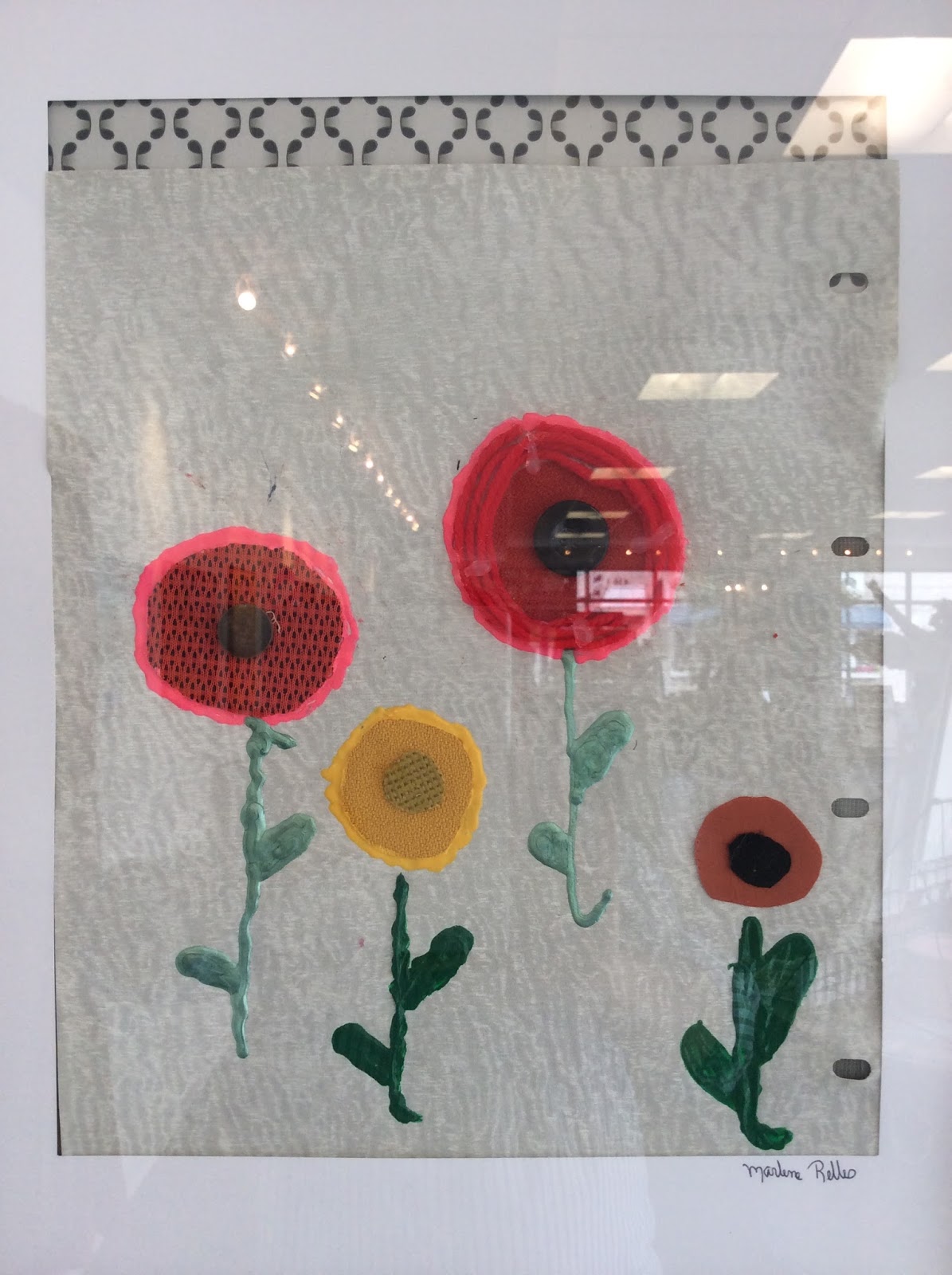
welcome spring
by marlene
 in progress, marlene


 Joanie


 marlene


Reaction to Trump Election
The election of Donald Trump as president has prompted a vociferous reaction in the art world.
Art has long been used to agitate the privileged, to amplify the voices of the less powerful.
   The commercial art establishment has its own problems with gender and race, but people like Tania Brugera in Cuba, Yael Bartana in Israel, Kara Walker in the US, Al Weiwei in China, and Pedro Reyes in Mexico defiantly use art to prod the status quo and question the way the world works.
   Are artists bound by duty to make art political? Perhaps art can be simply beautiful for beauty’s sake. Toni Morrison claims that all art is political. Artists are not compelled to create art which is solely beautiful. All the artists who try  hard not to be political are political by saying, ”we love the status quo.”
   In the recent past, poets of color, queer artists, writers of immigrant descent, Muslim photographers, and minorities on Broadway have been quick to stand up against hate, power and inequality in this country. This week, artists and writers across the internet are doubling down, voicing both justified fear and empowered resolve in the face of the Trump presidency.
   Of course this reaction was not limited to American.  German artist Wolfgang Tillman reacted on Instagram with an image of the Statue of Liberty crying Vik Munz, a Brazilian artist who splits his time between his native country and Brooklyn posted a black void on Instagram reflecting the sense of despair and hopelessness felt by many Clinton supporters in the wake of defeat.
Art critic Jerry Saltz shielded his eyes from the results. Disbelief was widespread given that Clinton’s lead in the pre-election polls left most experts giving her at least a 70% chance of victory. Others prompted action; in preparation for a potential increase of hate speech against Muslims, artists Jennifer Dalton shared an illustrated guide to dealing with Islamophobic harassment.
   Art journalist were also quick to express their disappointment with the election results. Art news co-executive editor Andrew Russeth took to Twitter with thematically appropriate works by Phillip Guston  and Faith Ringold. The sense that our nation was deeply divided was echoed by many in the art world.  presidency. The left wing is venting its rage, both at the country and its liberal press.
   In light of the outcome of last week’s outcome in the Presidential election, artist Annette Lemieux asked that her 1995 work, “Left Right Left” which consists of 30 picctures of raised fists mounted on pine poles be installed upside down by Whitney Museum, where it is currently featured in the exhibition,” Human Interest: Portraits from the Whitneyey’s Collection
   Jeff Javis, a liberal media critic, author and blogger who directs a journalism program at the city university of New York blamed the press tweeting:
                     “I fear that journalism is irredeemably broken,
                        A failure. My profession failed to inform the public
                        About the fascist they were electing.
Javis also wrote:  I’ll say it: “This is a victory of the uneducated and uninformed. (He blamed
 others  as well, including his race for inherent racism.) His gender for sexism and himself.  
Vik Munz, a Brazilian artist who splits his time between his native country and Brooklyn posted a black void on Instagram reflecting the sense of despair and hopelessness felt by many Clinton supporters in the wake of the defeat. Art critic Jerry Saltz shielded his eyes from the results.
   Disbelief was widespread, given that Clinton’s lead in the pre-election polls left most experts giving her at least a 70% chance of victory. Others prompted action; In preparation for potential increase of hate speech against Muslims, artist Jennifer Dalton shared an illustrated guide to dealing with Islamophobic harassment.


   It was Socrates who said that ”Man is by nature, “a political animal.” It might be naïve to assume that it is possible to exclude politics from art.

Wednesday, February 22, 2017

 marlene


 kathleen


 tosh


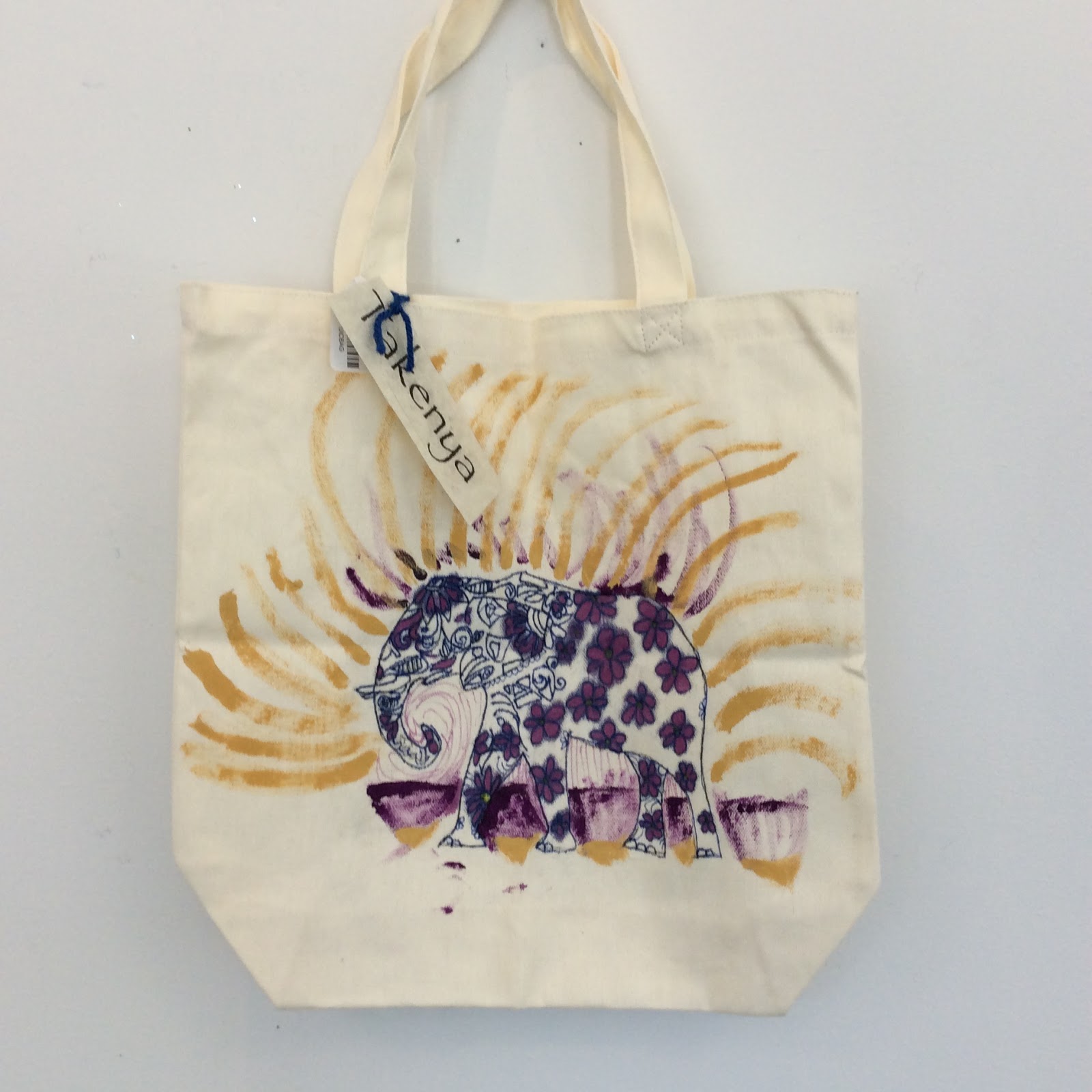
 takenya


 alysha


 marlene

marlene

Wednesday, December 21, 2016


collaborative effort


marlene


bruce

collaborative


Tradition
Gallery U Boutique is proud to present its latest exhibit, ”Tradition.” All of us have our own unique traditions for this time of year.
   Artists were asked to submit their favorite holiday or family tradition or the traditions of others that have moved them to create.  This collection of work tells a collective story of family, friendship, light, and joy; all the making of a Tradition.
   For our “Tradition” exhibit Gallery U Boutique located at the circle in the Root Buildings at 439 South Avenue West in Westfield, New Jersey is proud to welcome 11 local artists.
   The exhibit will be open from Thursday December 8 until January 13. A public artists’ reception for this and our Art in the Boutique show which highlights the work of Linnea W Rhodes is scheduled for Thursday December 8, from 6-8pm. All are welcome. The 11 local artists who were selected for this show include: Virginia Carrol, Avi Kiriakatis, Harriet Kushina, Charlann Meluso, Nancy Ori, Gina Petrecca, Lynn Ronan, Shalini  Prasadd, Linnea W Rhodes, Leon Seufert and Anthony Zachares.
   Linnea W Rhodes majored in Fine Arts at Douglas College, New Brunswick, New Jersey with a concentration in Printmaking (etchings aquatints and lithographs.) After graduating college Linnea worked in New York City as the Assistant to the Director of Art at Norcross Greeting Cards. While raising her family she started a business doing fine line ink drawings of houses in her hometown of Westfield, New Jersey. In 1989 she left art behind and worked for ten years as as the Executive Director of the Westfield Day Care Center. She has been painting in oil since 2000. She began working in colored pen and ink in 2006. She is presently a member of the CAG Board. Linnea Rhodes, Watercolor Collage, “Christmas Cookies” Is a bare minimalist watercolor Collage. It takes some time to appreciate. Seven popular Christmas cookie favorites are neatly portrayed in symmetrical order. 
 Virginia Carrol has been involved in art for as long as she can remember. She focused on art into her college years. For some time her focus was on her children and family, but she found that she could not stay away from her easel. She then found colored pencil as a medium and began producing drawings at such a rate that she was able to collect a body of work exceeding 40 drawings in the space of 7 months and was given a “one man” show at Hilltop Gallery in Nogales, Arizona. Since then she has continued to create drawings in colored pencil and has been accepted to many shows of renown. Ms. Carrol senses beauty in all things, particularly the flora and the fauna of the desert. Her submission for our “Tradition” exhibit, “Gala Ceremony” is crowded with a multitude of distinctive figures. Ms. Carrol demonstrates a clearly higher level aesthetic acumen. Her ability to so clearly etch distinctive features is indicative of pure talent.
   Harriet Kushins uses the camera lens to capture her soundings. The camera lens permits her, as an observer and photographer to provide an expressive perspective on the world .She focuses on nature’s beauty through her travels. It gives her an opportunity to observe, to step back, reflect, linger, and capture beauty in different spaces. The image she sees through the lens leads her to explore a subject; its angles, space and light to reveal complex relationships.      Harriet Kushins’ “All Aglow” is a digital photograph that is extremely modern; brightly shaded spheres are scattered beneath elongated, oblong shaded figures. Fireworks explode in the background of this luminescent Digital Photo. On the subject of Tradition…Not only is Tradition manifest in our unique activities as they are engaged during our lived experience. Tradition, as the historical manifestation of that lived life determines those activities. We exist in Time. It is our temporal Horizon, and our cognizance of our place in Time and to a lager extent, History that manifests itself as a Tradition.
   Tradition is a complex topic. Its manifestation is witnessed in our Christmas festivities, but those activities have much deeper roots.
   It can easily be anticipated why our director chose the theme of: “Tradition” for our latest show. It is topical, and more than many of our other shows is manifest of present times.


greg b


 marlene


tosh


joanie